
Tongue Twisters with Sound B: Practice Guide with Audio & Examples
5 English tongue twisters with the B sound — with images, explanations, and a free practice app. Improve pronunciation, rhythm, and speech clarity in minutes a day.
Learn English
Pronunciation
Tongue Twisters with Sound B: Practice Guide with Audio & Examples
5 English tongue twisters with the B sound — with images, explanations, and a free practice app. Improve pronunciation, rhythm, and speech clarity in minutes a day.
The "B" sound is one of the first consonants English learners encounter — but saying it clearly at speed, inside connected phrases, is harder than it looks. Tongue twisters are one of the fastest ways to build that muscle memory. Below you'll find 5 tongue twisters targeting the "B" sound, each with an image, the full text, and an explanation to help you practice effectively.
Want to practice with audio? Download the free Tongue Twisters: Say Aloud app — it gives you model pronunciation, adjustable speed, and voice recording so you can hear yourself and compare. Read more about the app and pronunciation methods on say-aloud.com.
1. Which of the buildings will be a bit bad?
This classic tongue twister packs multiple "B" sounds into a question about a British builder. It's great for practicing "B" at the beginning of words and in clusters like "br" (British, builder, bricks):

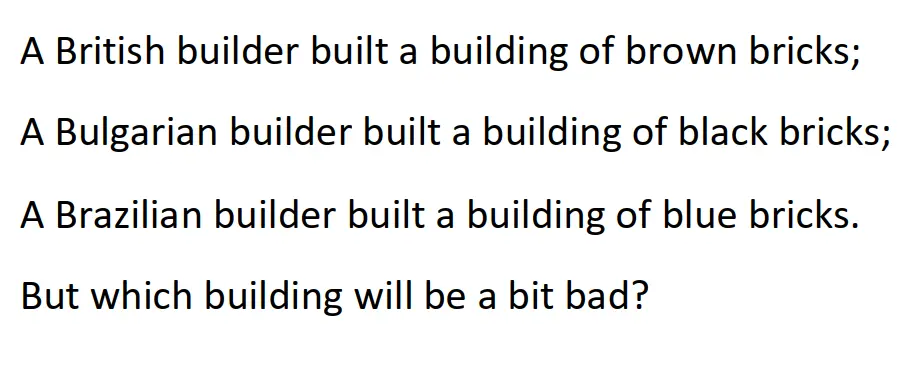
Of course, none of the buildings will be "a bit bad" — the color of the bricks doesn't determine the quality of the building! But repeating this line trains your mouth to produce the "B" sound rapidly in sequence. Focus on keeping each "B" crisp and separate — don't let them blur together.
How to practice: Start slowly. Say each word individually, then gradually connect them into a smooth phrase. Try saying it three times in a row without stumbling.
2. What about brave bikers?
This one adds the "br" blend (brave, biker, break) and forces you to switch between "B" and other consonants quickly. It's a step up in difficulty:

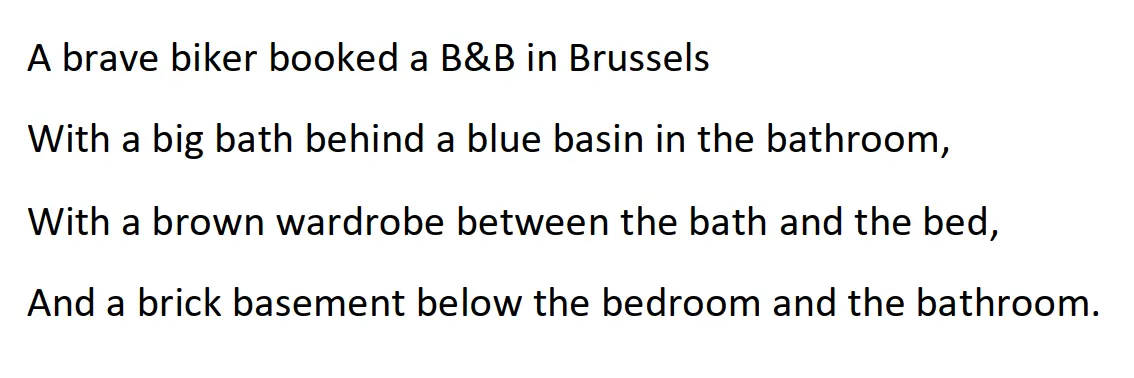
When you practice tongue twisters like this one, you train your mouth, tongue, and vocal cords to produce sounds accurately and quickly. This directly translates to clearer communication in real conversations. Additionally, practicing tongue twisters improves your listening skills — you learn to distinguish between similar sounds and subtle variations in pronunciation.
Tip: Record yourself with the Tongue Twisters: Say Aloud app and compare your recording to the model audio. You'll hear differences you can't notice while speaking.
3. Bees, beetles and butterflies
This tongue twister uses alliteration with "B" across different word types — nouns (beetles, butterflies, boxes), proper nouns (Brothers Bean), and adjectives (blue, brown, beautiful, bigger). It's excellent for building flow:

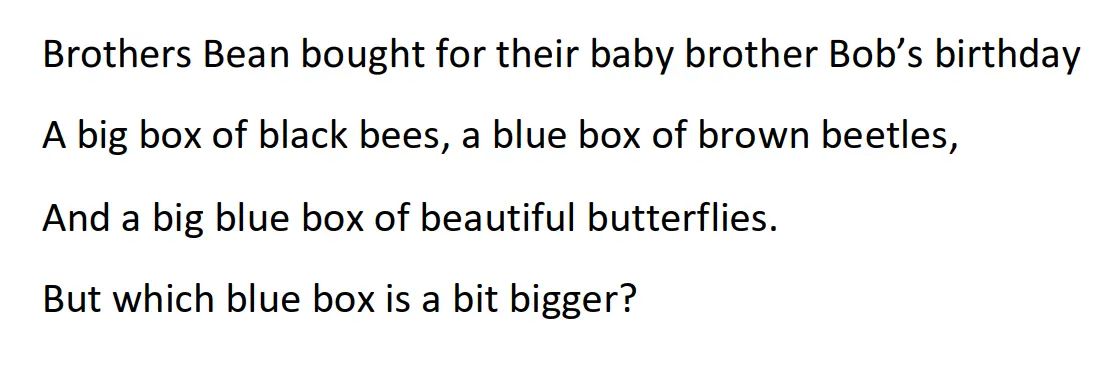
The Brothers Bean bought two blue boxes — one containing brown beetles, the other containing beautiful butterflies. Which blue box is a bit bigger? The answer: we can't know from the text alone! But your mouth got a full workout just saying the question.
Challenge: Try saying this one at 1.5x speed. If you can do it cleanly, your "B" articulation is in great shape.
4. Big Boss at the bank
Now we move to longer, more complex sentences. This tongue twister forces you to sustain the "B" sound across a full narrative — from "big boss" to "bored" to "Berlin branch" to "beaches of Biscay Bay." It builds endurance and connected speech:

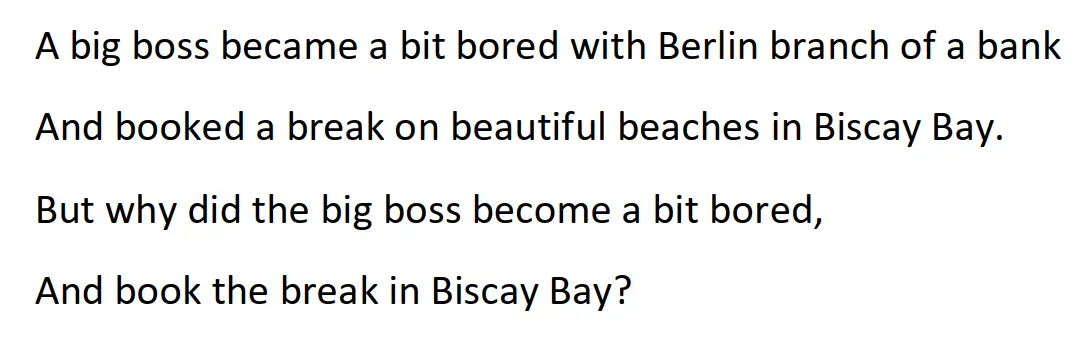
Why did the big boss become bored with the Berlin branch? We can only speculate — maybe work stress, dissatisfaction, or simply a need for a change of scenery. What matters for your practice is the sheer density of "B" sounds in one story.
How to practice: Break this one into chunks. Master "big boss became bored" first, then "Berlin branch of the bank," then "book a break on the beaches of Biscay Bay." Finally, connect all chunks.
5. The baker's tongue twister
The most complex example in our collection. In some cultures, tongue twisters have evolved into competitive games — participants try to outdo each other with speed and precision. This baker-themed twister is one such challenge:

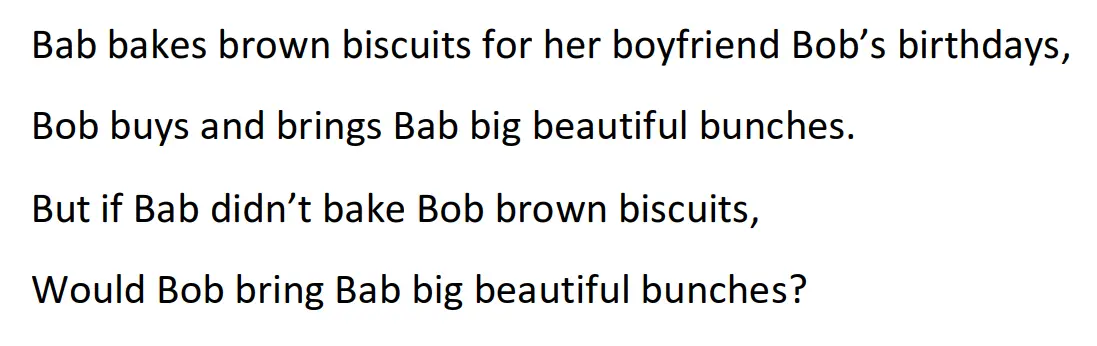
Can you say it three times fast without mistakes? If so, you've mastered the "B" sound at speed. Challenge your friends or students to try!
What to do next
Tongue twisters are one piece of effective pronunciation practice. Here's how to build a complete routine:
Use the Tongue Twisters: Say Aloud app for structured drills with model audio, recording, and progress tracking. It's free on iOS — learn more at say-aloud.com.
Watch YouTube or Netflix content in English using the eLang browser extension — dual subtitles let you understand every word while absorbing natural pronunciation, rhythm, and intonation.
Pick a short clip from your YouTube watching session and speak along with it. The Say Aloud shadowing guide explains the method step by step.
The combination of targeted articulation practice (tongue twisters), comprehensible input (eLang), and active speaking (shadowing) covers all three pillars of pronunciation improvement. Start today — your mouth will thank you.
Learn English with YouTube and Netflix
Practice articles and vocabulary in real series and videos
See grammar in context with dual subtitles — then save words in one click. Free eLang browser extension.
添加到浏览器Practice what you learned
English Listening by Podcasts
Sharpen your listening skills with real English podcasts.


上一篇文章
下一篇文章
上一篇文章
下一篇文章
You might also like: